





PentaMag, 30 capsules
PentaMag, 5 magnesium salts + B6, for energy, heart and nervous system health. Reduces tiredness and fatigue. 30 capsules.
€11.90
€9.90
Ingredients per serving (1.5 g):
One measuring teaspoon (1.5 g) contains:
*NRV – Nutrient Reference Values, according to Regulation (EU) No 1169/2011.
Free from artificial sweeteners, colorants, preservatives, other chemical additives, and genetically modified organisms (GMOs)
| Nutritional information | Per 100 g of product |
| Energy | 143 kJ / 34 kcal |
| Total carbohydrates, of which: | 7.55 g |
| Sugars | 0.87 g |
| Fat, of which: | 0.02 g |
| Saturated fatty acids | 0.01 g |
| Protein | 0.41 g |
| Salt* | 1.96 g |
*The salt content is due exclusively to the naturally occurring sodium.
Warnings
Side Effects and Interactions
Storage Conditions
Every day, metabolism naturally produces acidic compounds, which the body neutralizes through complex mechanisms involving buffer systems and a range of essential minerals. Diet, physical activity, and lifestyle can influence this balance, increasing the need to support these natural mechanisms.
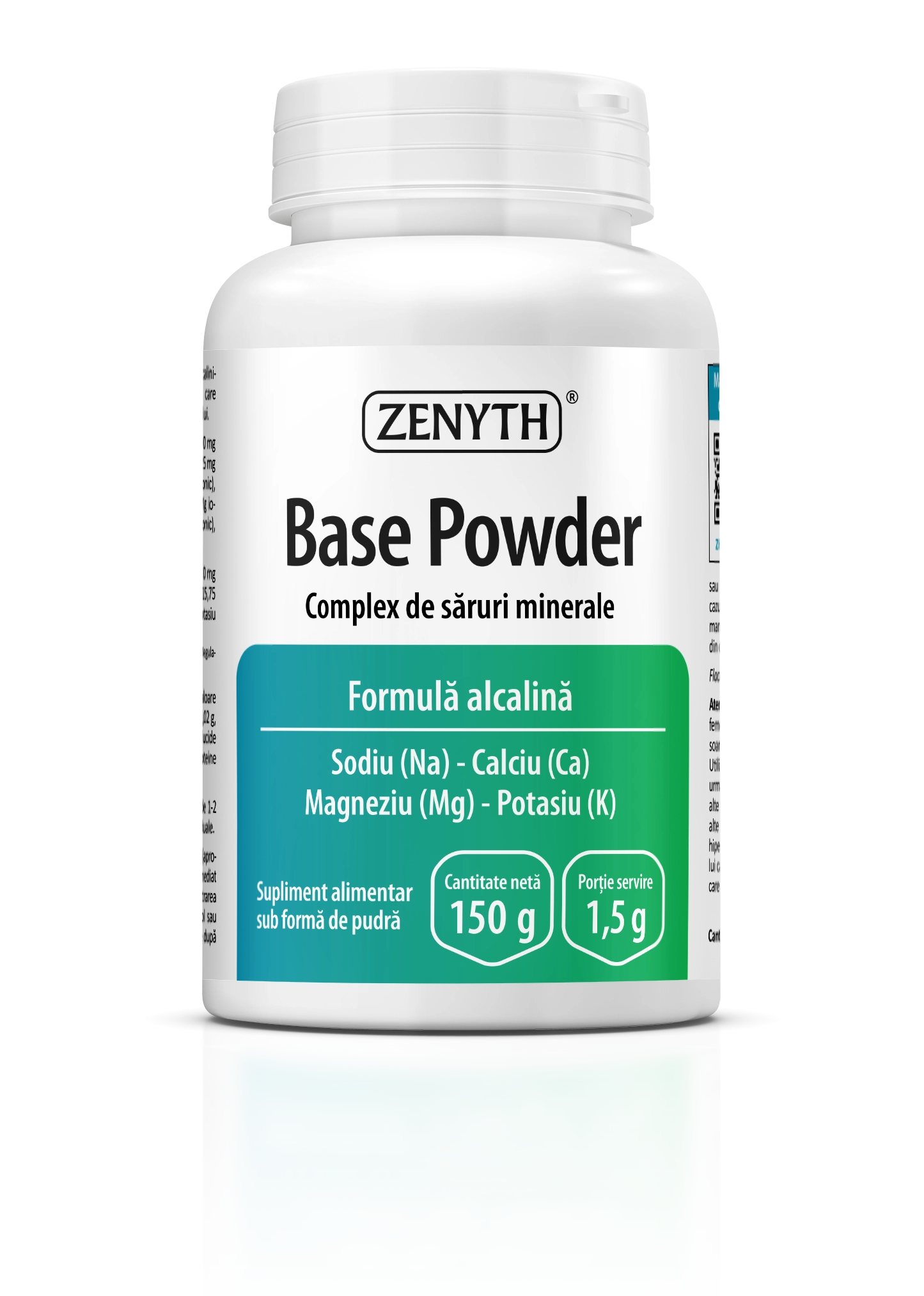
Zenyth Base Powder is a complex formula based on alkalizing mineral salts, combining sodium bicarbonate, calcium carbonate, magnesium citrate, potassium citrate, and disodium phosphate. These ingredients have been selected for their complementary mechanisms of action, helping support the body’s acid-base balance and providing electrolytes involved in numerous physiological processes.
By combining several mineral salts with buffering properties, the formula provides both a rapid action and a sustained effect, complemented by the supply of sodium, calcium, magnesium, and potassium – important minerals for normal muscle and nervous system function, energy metabolism, and maintaining electrolyte balance.
In an easy-to-dissolve powder form, Base Powder is recommended for people who want to supplement their intake of alkalizing minerals and electrolytes as part of a balanced lifestyle and varied diet.
Did You Know? Approximately 60% of an adult’s body is made up of water, and the balance between electrolytes such as sodium, potassium, calcium, and magnesium is essential for nerve impulse transmission, muscle contraction, and maintaining cellular hydration. The body continuously regulates the concentration of these minerals to ensure the normal functioning of cells and physiological systems.
The human body functions optimally when it is able to maintain a delicate balance between the acids and bases produced as a result of metabolic processes. This balance, known as acid-base balance, is essential for the normal functioning of numerous physiological processes, from energy production and enzyme activity to muscle and nervous system function.
Contrary to what is often believed, the body does not aim to become “alkaline,” but rather to maintain its pH within very narrow limits. Even minor changes in pH are rapidly compensated for through complex physiological mechanisms involving buffer systems, the lungs, and the kidneys. This self-regulating capacity is known as homeostasis and is essential for normal body function.
For these mechanisms to work effectively, the body uses several natural buffering systems. The most important is the bicarbonate buffer system, which acts rapidly to neutralize excess protons (H⁺). This is complemented by the phosphate buffer system, which is particularly active at the cellular and renal levels, as well as by other physiological mechanisms that help maintain the stability of the internal environment.
Certain minerals, such as sodium, potassium, calcium, and magnesium, also play an important role. In addition to contributing to electrolyte balance, these minerals are involved in nerve impulse transmission, muscle contraction, energy metabolism, and cellular hydration. For this reason, formulas combining several mineral salts can provide a complementary source of electrolytes while supporting the body’s natural buffering mechanisms.
When we talk about electrolytes, we are not referring only to minerals, but to the form in which they circulate throughout the body. Dissolved in body fluids, minerals such as sodium, potassium, calcium, and magnesium become electrically charged ions capable of transmitting signals between cells and participating in numerous physiological processes.
Each electrolyte has a specific role. Sodium contributes to maintaining extracellular fluid volume and to the transmission of nerve impulses. Potassium is the main cation inside cells and is essential for the normal function of muscle fibers and the nervous system. Calcium is involved in muscle contraction, blood clotting, and communication between cells, while magnesium participates in hundreds of enzymatic reactions involved in energy production and protein synthesis.
The body continuously regulates electrolyte concentrations, but these can be influenced by heavy sweating, high temperatures, intense physical activity, or insufficient fluid intake. Therefore, maintaining an adequate mineral intake is important for normal body function.
Citrates are not used only because they provide minerals such as magnesium and potassium. They have a property that distinguishes them from other mineral salts: after absorption, the citrate ion is metabolized mainly in the liver and converted into bicarbonate, one of the compounds involved in the physiological systems that regulate acid-base balance.
For this reason, citrates are considered salts with a metabolic alkalizing effect. Unlike compounds that act primarily in the stomach, their effect occurs after absorption and results from the body’s normal metabolic processes.
Another benefit of citrates is their role in urinary tract health. Citrate binds to free calcium in the urine, reducing its tendency to form crystals. At the same time, it promotes a less acidic urinary pH. These mechanisms contribute to maintaining a balanced urinary environment and reducing the risk of certain types of urinary stones.
There are numerous sources of minerals used in food supplements, but they differ in solubility, absorption, and the way they participate in physiological processes. The choice of chemical form influences both how quickly it acts and the role it can play in the body.
Base Powder combines four different types of mineral salts, each selected for specific properties. Sodium bicarbonate is highly soluble and reacts rapidly in an acidic environment. Calcium carbonate dissolves more slowly and simultaneously provides calcium. Citrates provide well-tolerated sources of magnesium and potassium, while disodium phosphate complements the formula by providing a component involved in one of the body’s physiological buffer systems.
Through this combination, the product is not intended to provide large amounts of a single mineral, but rather a balanced supply of mineral salts with different properties that can complement normal physiological mechanisms while also providing electrolytes involved in numerous metabolic processes.
Sodium Bicarbonate: The First Line of Defense Against Excess Acids
Bicarbonate is one of the most important compounds involved in maintaining the body’s acid-base balance. In the blood and extracellular fluids, it forms part of the bicarbonate buffer system, the main mechanism through which the body limits changes in pH.
From a chemical perspective, bicarbonate can bind hydrogen ions (H⁺), which are responsible for acidity. This reaction produces carbonic acid, which is subsequently converted into water and carbon dioxide, which is eliminated through respiration. This reaction enables the rapid neutralization of excess acids naturally produced during metabolism.
Due to its high solubility, sodium bicarbonate acts rapidly after intake and is one of the most commonly used ingredients in formulas intended to support physiological buffering mechanisms.
Calcium Carbonate for a Gradual Buffering Effect and Calcium Intake
Calcium carbonate complements the action of bicarbonate through a different mechanism. As it is less soluble, it reacts more slowly with an acidic environment, resulting in a more prolonged neutralizing effect.
Base Powder uses precipitated calcium carbonate, a form obtained through controlled precipitation and characterized by very fine particles and a large contact surface. These properties facilitate a more efficient reaction with gastric acid compared with coarser mineral forms.
In addition to its role in buffering, calcium carbonate provides calcium, an essential mineral for the body. Calcium contributes to normal muscle function, participates in nerve impulse transmission, is involved in normal blood clotting, and is the main mineral component of bones and teeth.
Magnesium Citrate, a Well-Absorbed Source of Magnesium
Magnesium is one of the minerals involved in a wide range of biochemical processes in the body. It participates in more than 300 enzymatic reactions and is required for the production of ATP, the molecule that provides energy to all cells.
In Base Powder, magnesium is present as citrate, one of the organic forms with good absorption. After absorption, the citrate component is metabolized in the body, contributing to bicarbonate formation and thereby complementing the physiological mechanisms involved in maintaining acid-base balance.
Magnesium contributes to normal energy metabolism, normal nervous system and muscle function, and the maintenance of electrolyte balance. It is also involved in protein synthesis and cell division processes.
Potassium Citrate, an Organic Form of Potassium with an Alkalizing Effect
Potassium is the main mineral found inside cells and plays an essential role in nerve impulse transmission, muscle function, and maintaining fluid and electrolyte balance.
In the form of citrate, potassium offers an additional benefit. After citrate is metabolized, bicarbonate is produced, which explains the frequent use of potassium citrate in formulas intended to support acid-base balance.
In addition, citrates play an important role in maintaining urinary tract health. They reduce the concentration of free ionic calcium in urine and inhibit crystal aggregation, mechanisms that contribute to limiting the formation of certain types of urinary stones, particularly those composed of uric acid, cystine, or calcium oxalate.
Disodium Phosphate: A Component of the Phosphate Buffer System
Although less well known than bicarbonate, the phosphate buffer system plays an important role in regulating pH at the intracellular and renal levels. Disodium phosphate provides the hydrogen phosphate ion (HPO₄²⁻), which can bind excess protons and contribute to stabilizing the internal environment.
This system is particularly important in the kidneys, where it participates in proton excretion and the maintenance of acid-base balance through physiological excretion mechanisms. For this reason, phosphate complements the action of bicarbonate and citrates by acting in a different compartment of the body.
In addition to its role in buffer systems, phosphorus is an important component of cell membranes and molecules involved in energy metabolism, including ATP.
The Body’s Balance Is Built Every Day. Support It with Zenyth Base Powder!
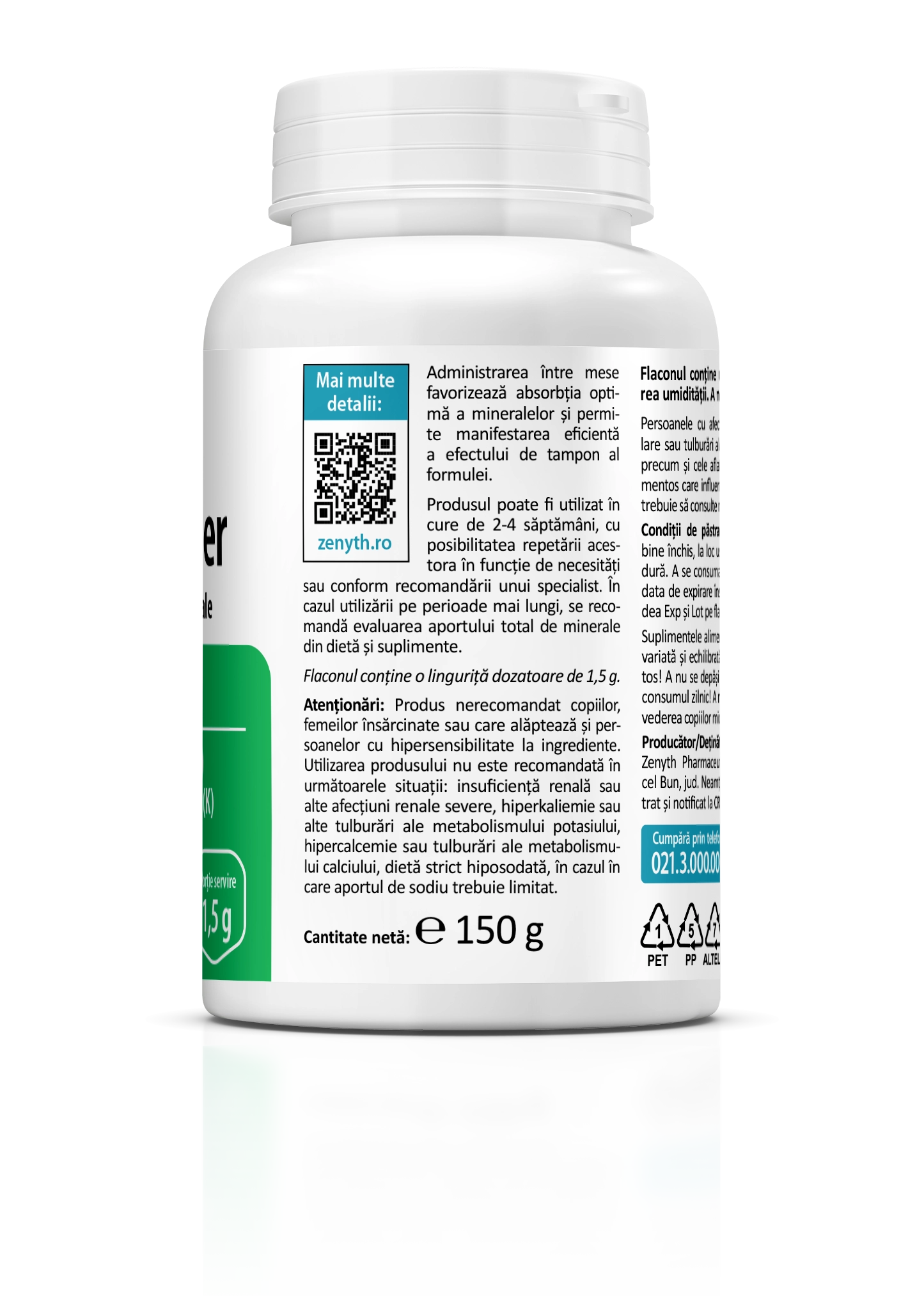
Base Powder 150 g is a food supplement.
Food supplements should not be used as a substitute for a varied and balanced diet and a healthy lifestyle. Do not exceed the recommended daily intake. Keep out of the reach and sight of young children.
Manufacturer/Notification Holder: Zenyth Pharmaceuticals SRL, Alexandru cel Bun, Neamț County, Romania. Product registered and notified with CRSP-G, No. 263/2026.

PentaMag, 5 magnesium salts + B6, for energy, heart and nervous system health. Reduces tiredness and fatigue. 30 capsules.
€11.90

Partially hydrolyzed guar gum Sunfiber®, for digestive comfort and supporting regular intestinal transit. 150 g powder.
€21.90
Creatine 1000 mg in monohydrate form, the “gold standard” for physical performance, strength, and muscle mass. Suitable for athletes and adults. 60 capsules.
€16.90

Motility Help, a complex formula designed to stimulate digestion, intestinal motility, and bile secretion. Helps improve bowel transit. 30 capsules.
€9.90